
How Epoxy Flooring Supplies Affect The Final Floor Finish
Epoxy flooring systems are widely used across residential, commercial, and industrial environments because they deliver a seamless, durable, and visually consistent surface. The final outcome depends heavily on the quality and compatibility of epoxy floor supplies, which influence adhesion strength, curing behavior, and long-term surface performance. When these materials are selected without proper consideration, the floor may develop inconsistencies such as uneven texture, reduced durability, or premature wear. For that reason, material selection directly determines whether the installation performs as expected over time.
A successful epoxy system must also balance appearance with function. While many clients prioritize gloss and visual appeal, long-term performance is equally important in high-traffic or high-impact environments. This balance is achieved only when floor supplies are properly matched to substrate conditions, environmental factors, and intended usage. Each component plays a specific role in the final outcome, and even minor mismatches can affect the overall finish quality.
Selecting Resin Systems for Performing
Resin selection is one of the most important decisions in determining how the final floor will perform. Different resin formulations vary in viscosity, solids content, and flow behavior, all of which influence leveling and surface smoothness. High-quality epoxy floor supplies typically include resins designed for controlled application, which helps reduce imperfections such as bubbles, streaks, or uneven coating thickness.
In heavier-duty applications, resin thickness becomes especially important. According to findings referenced by This Old House, commercial epoxy flooring systems may be engineered to reach significant thickness levels—up to approximately 375 mm depending on durability requirements and structural conditions. This demonstrates how resin systems can be adapted for extreme environments where load resistance and impact protection are essential. Thicker applications are typically used in warehouses, manufacturing plants, and industrial facilities.
Resin choice also affects aesthetic outcomes. Clear systems highlight decorative aggregates, while pigmented systems provide uniform color consistency across large surfaces. These design choices are often guided by the performance characteristics of epoxy floor supplies, ensuring the final finish aligns with both functional and visual expectations.
Blending Hardener Systems for Curing
Hardener selection directly impacts how epoxy floors cure and achieve their final strength. Different hardeners control reaction speed, hardness, flexibility, and chemical resistance, all of which influence long-term performance. Professional-grade floor supplies often include multiple hardener options designed for different environmental demands.
Amine-based hardeners are commonly used in general applications because they provide predictable curing behavior and balanced performance. These systems are suitable for residential garages, retail environments, and light commercial spaces. More advanced hardener formulations are used in industrial environments where higher resistance to chemicals and mechanical stress is required.
Accurate blending is essential to ensure proper curing. If the ratio between resin and hardener is incorrect, the system may fail to fully cure or develop weak structural zones. Installers rely on measured mixing processes when working with epoxy floor supplies to maintain consistency across large surface areas. This ensures the floor cures evenly and achieves its intended durability.
Preparing Substrate for Bonding
Substrate preparation is a critical step that determines how effectively epoxy bonds to the surface. Without proper preparation, even premium floor supplies cannot achieve optimal performance. Contaminants such as dust, grease, and moisture can significantly reduce adhesion and lead to premature coating failure.
Mechanical preparation methods such as grinding or shot blasting are commonly used to create a roughened surface profile. This increases surface area and improves mechanical bonding between the substrate and epoxy system. Proper preparation ensures that floor supplies can fully adhere and form a stable foundation.
Moisture testing is also essential before application. Excess moisture trapped beneath the coating can cause bubbling, delamination, or long-term degradation. Addressing these issues early ensures that the flooring system remains stable and structurally sound over time.
Priming Surfaces for Adhesion
Primers play an essential role in bridging the gap between the substrate and epoxy coating system. They help seal porous surfaces and create a uniform base that improves adhesion and coating consistency. When used correctly, primers enhance the performance of epoxy floor supplies by reducing absorption inconsistencies.
Different substrates require different primer formulations depending on porosity, condition, and environmental exposure. A properly selected primer ensures that the epoxy system spreads evenly and cures uniformly. This reduces the risk of surface defects such as pinholes, bubbling, or uneven texture.
Priming also improves durability by strengthening the bond between layers. This additional adhesion layer helps the system resist peeling or separation under heavy traffic or mechanical stress, extending the lifespan of the finished floor.
Controlling Cure Timing for Strength
Cure timing is a key factor in determining the strength and appearance of epoxy flooring. If curing happens too quickly, the surface may trap air or develop inconsistencies. If it occurs too slowly, the installation may become vulnerable to contamination or environmental disruption.
Environmental conditions such as temperature and airflow significantly influence curing behavior. Controlled conditions allow epoxy floor supplies to react consistently, producing a smoother and more durable surface. Installers often adjust site conditions to maintain stable curing environments.
Timing between coats is equally important. Each layer must be applied within a specific window to ensure proper bonding with the previous layer. If this timing is missed, interlayer adhesion may weaken, reducing overall system durability.
Managing Temperature and Humidity Conditions
Temperature and humidity play a direct role in how epoxy systems perform during installation and curing. Variations in these conditions can affect leveling, curing speed, and final surface quality. Maintaining stable environmental conditions helps ensure consistent performance.
Lower temperatures typically slow curing, which can improve leveling but extend project timelines. Higher temperatures accelerate curing and require faster application to avoid inconsistencies. Professionals adjust application methods based on these conditions to maintain control over the final finish.
Humidity is equally important because excessive moisture can lead to surface defects such as bubbling or clouding. Dehumidification equipment is often used to stabilize conditions during installation. Proper environmental control ensures floor supplies perform as intended and produce a consistent finish.
Applying and Finishing Flooring Systems
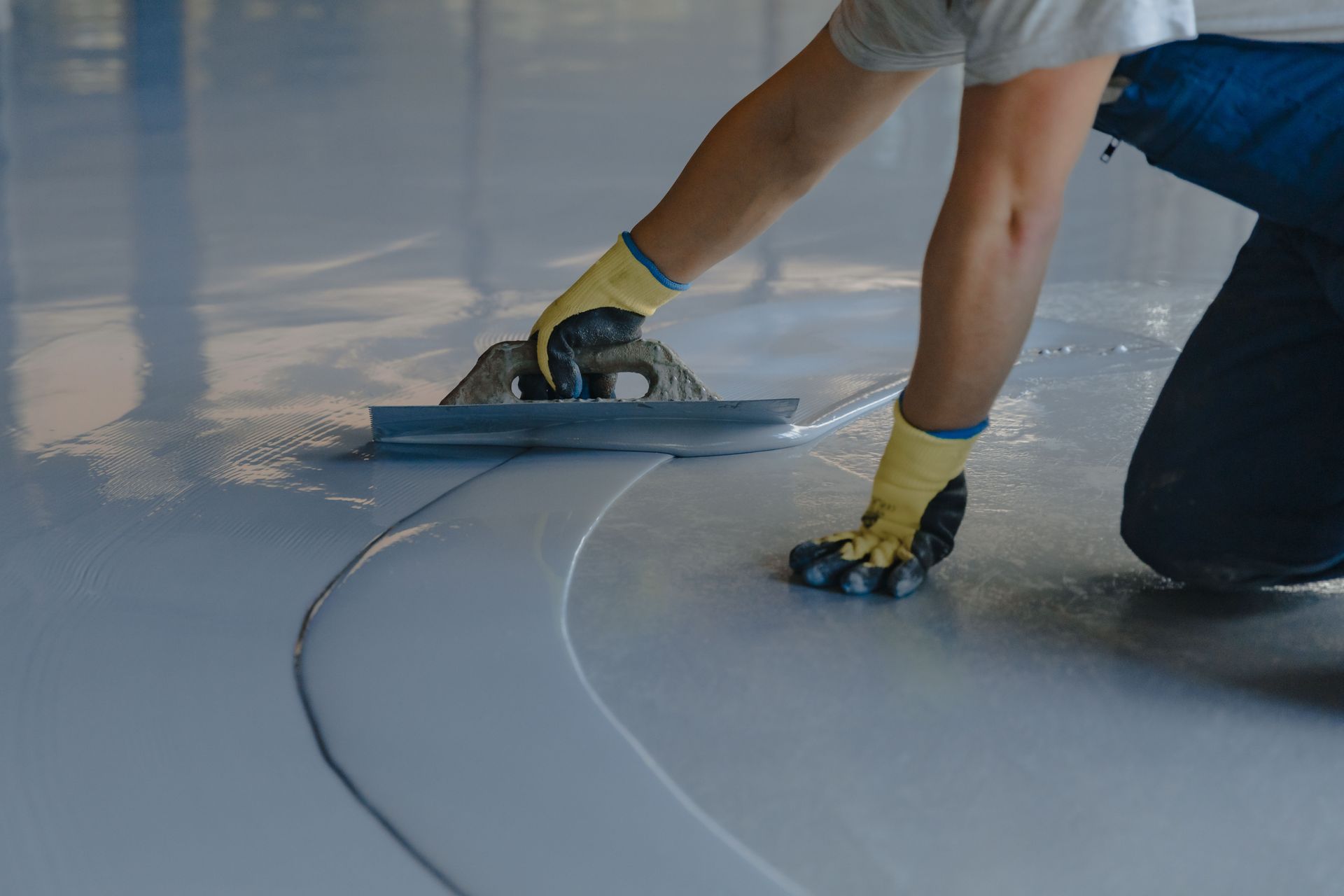
Application technique is one of the most visible factors affecting final floor quality. Even with high-quality epoxy floor supplies, improper application can lead to uneven coating thickness, streaking, or surface defects. Tools such as rollers, squeegees, and spreaders are used to ensure consistent application across the surface.
Layering strategy also plays a major role in achieving long-term durability. Most epoxy systems require multiple coats to build strength and improve finish quality. Each layer must bond properly with the previous one to form a unified structure capable of withstanding heavy use.
Final finishing steps such as sealing or polishing enhance both appearance and protection. These processes improve gloss, resistance to wear, and long-term durability. When executed correctly, the result is a professional-grade surface designed for demanding environments.
Epoxy flooring performance depends on the careful coordination of materials, preparation, and environmental control. Each stage of the process—from resin selection to final finishing—directly influences durability, appearance, and long-term stability. Proper use of epoxy floor supplies ensures consistency across all phases of installation and reduces the risk of premature failure or surface defects.
When correctly installed, epoxy flooring delivers a durable, low-maintenance, and visually consistent solution suitable for a wide range of environments. For professional-grade materials and expert flooring solutions, contact Architectural Products Inc.
Subscribe to our Blog





Share On: